Johannes Vermeer · 1668 · Oil on canvas · Baroque
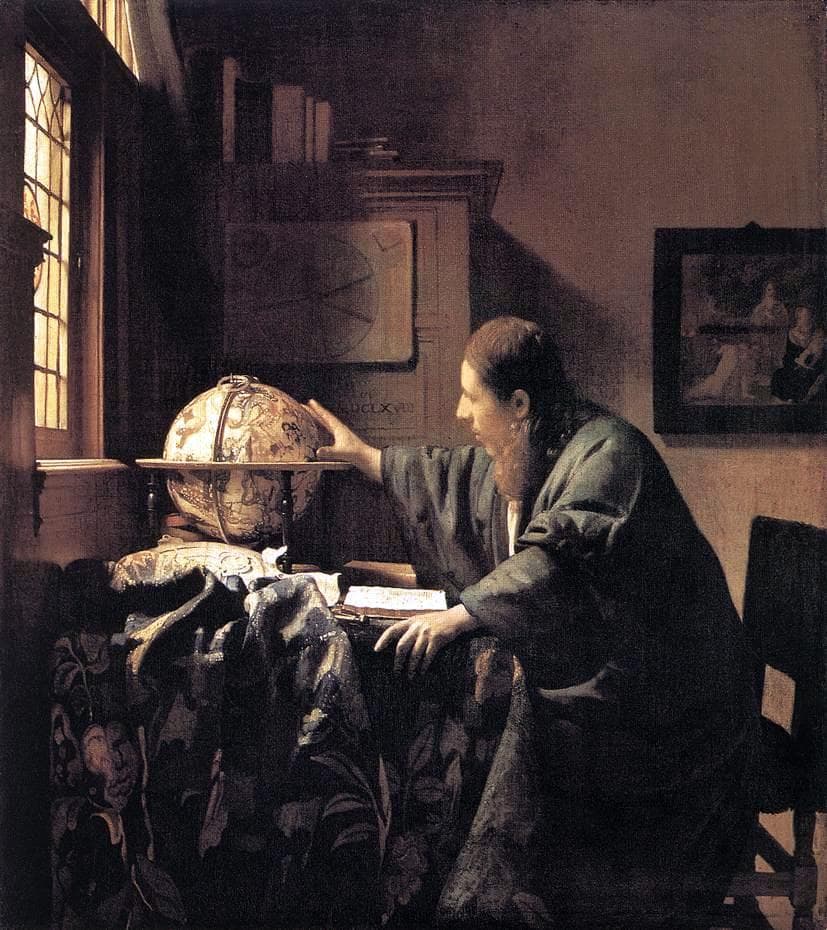
The Astronomer
Vermeer painted thirty-six pictures that we know of. The Astronomer is one of two that depict men working — the other is The Geographer, painted the following year and almost certainly of the same model. Together they are the only Vermeers without a woman as the subject.
The painting is small, about half a meter tall, and intimate. A scholar reaches toward a celestial globe — the constellations of the northern hemisphere are visible on its surface — while his book lies open before him on a heavy table. The light comes in from a window we cannot see, and falls on his hand, on the globe, on the pages of the book. Everything else is in soft shadow.
What Vermeer understood, better than almost any other painter, was the relationship between light and stillness. The scene is quiet not because nothing is happening, but because the man is concentrating. The act of attention has weight in the picture. You feel it the way you feel the silence in a library.
The book on the table has been identified — it is On the Investigation or Observation of the Stars by Adriaan Metius, open to a passage about "inspiration from God" as the source of astronomical knowledge. Vermeer was making a point. The astronomer is not a calculator. He is something closer to a contemplative.
I keep a print of this painting where I can see it from my desk. It does not motivate me, exactly. It does something quieter than that. It reminds me what the work is supposed to look like.
More works