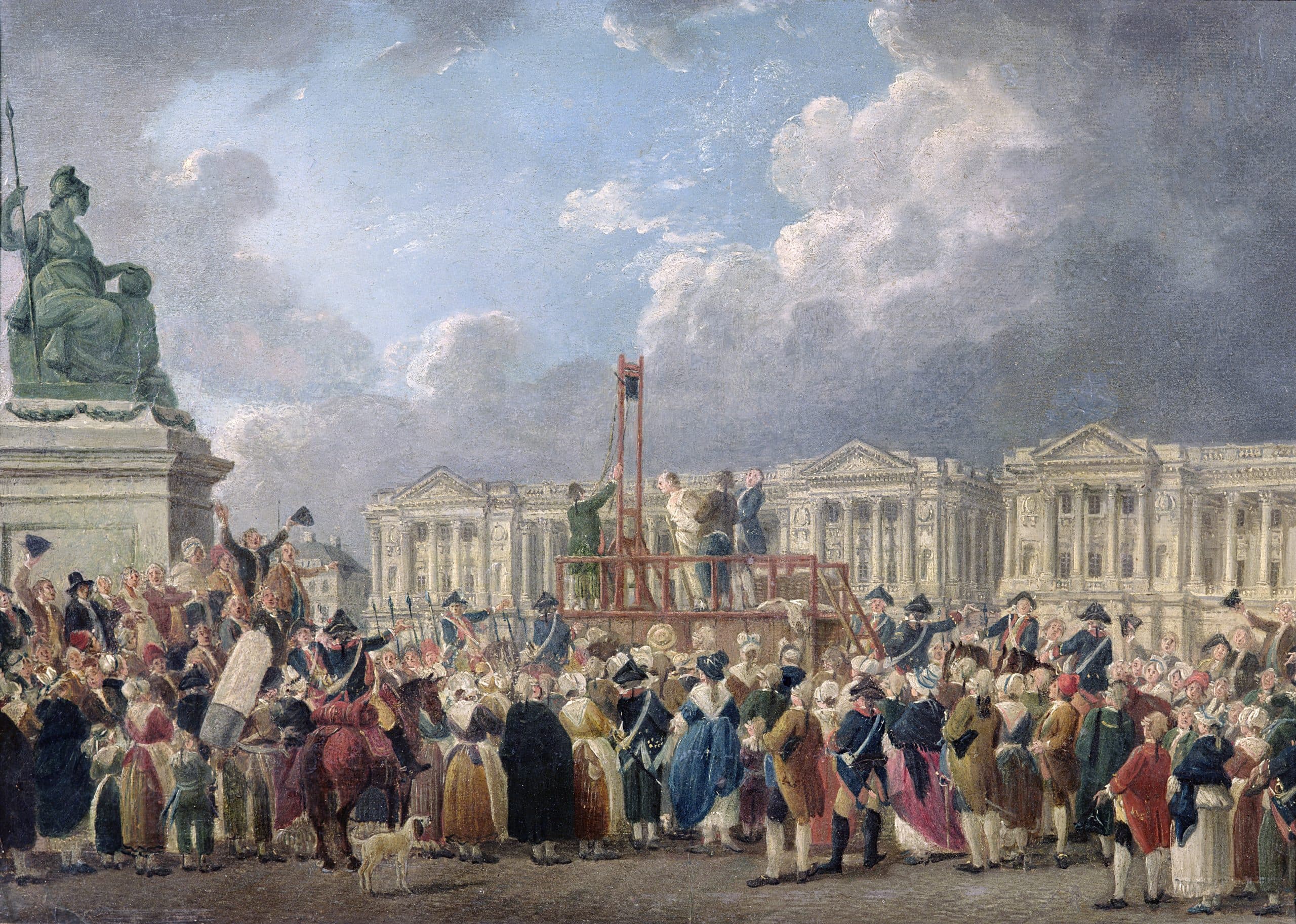
Une exécution capitale, place de la Révolution · Pierre-Antoine Demachy · 1793
Public Executions and the reason People watched it
There is something artistic about death, isn't there? It is important, after all, the opposite of "to be". It is dramatic yet romantic. Some can add dozens of different feelings for the event depending on the situation; however, we are going to focus on one situation where there was blood, swinging legs, rolling heads around the most famous places across Europe, such as Place de Grève in Paris, France. Even though it sounds so inhumane in our contemporary world, public executions were a thing, and dozens of people were going to watch them, but why? Why would someone want to watch someone's death? For joy? Or maybe entertainment? I don't think so, as it was disgusting to the core, and any human being would have uncomfortable feelings while seeing such a scene. Therefore, people went there as they were going to see an act or a theatre.
I have a question. As you would remember, there was an earthquake in Türkiye a few years ago. I bet you were in front of the TV or your phone seeking news: what happened, which building collapsed? Did you do it for joy? Was it fun to watch the deaths of hundreds of people? Of course not, but why do we still watch? Well, that is the question that I don't have an answer for. Therefore, in medieval times, public executions would have had the same effect; additionally, it was for the public to send a clear message: DO NOT FOLLOW THAT MAN, OR YOU WILL END UP LIKE HIM. Teachers were taking their classes to see public executions, and parents were beating their children on execution days. The most interesting part? Most of the time, the criminals weren't sentenced to public execution because they had taken a life or damaged something. They were people who were against the system or "were affecting the economy, politics, or whatever." For example, in 1535, John Houghton was convicted to death due to his thoughts on not accepting King Henry VIII as the Supreme Head of the Church of England. They hanged him first, then cut his insides out and burned them, and he had lived long enough to witness everything. After his death they beheaded him and cut his body into 5 pieces. Pirates were also sentenced to public executions, as they were affecting not only individuals but the economy of the whole nation.
Sounds devastating, but they all happened in front of people, hundreds of people perhaps.
Public executions were a reality in medieval times and even after the Dark Ages, until right after the French Revolution, and played an important role in people's daily routines. It is not easy to understand this situation and how people were so comfortable with those scenes. Even though there are still some public executions in some places around the globe, most of us haven't and won't see one. At the end of the essay, the question of why people watched remains unanswered, yet the fact that people watched others die will remain in our civilization's shared memory, remembered alongside words like "disgusting," "inhumane," or even "artistic."
For the Curious:
Would You Watch A Public Execution?
More essays