· ·
What Carried Us Through?
Imagine a modern human stepping back from their desktop and walking out into the hills, barefoot, where cold water burns their feet, the terrain batters them, and high bushes scratch their arms and legs.
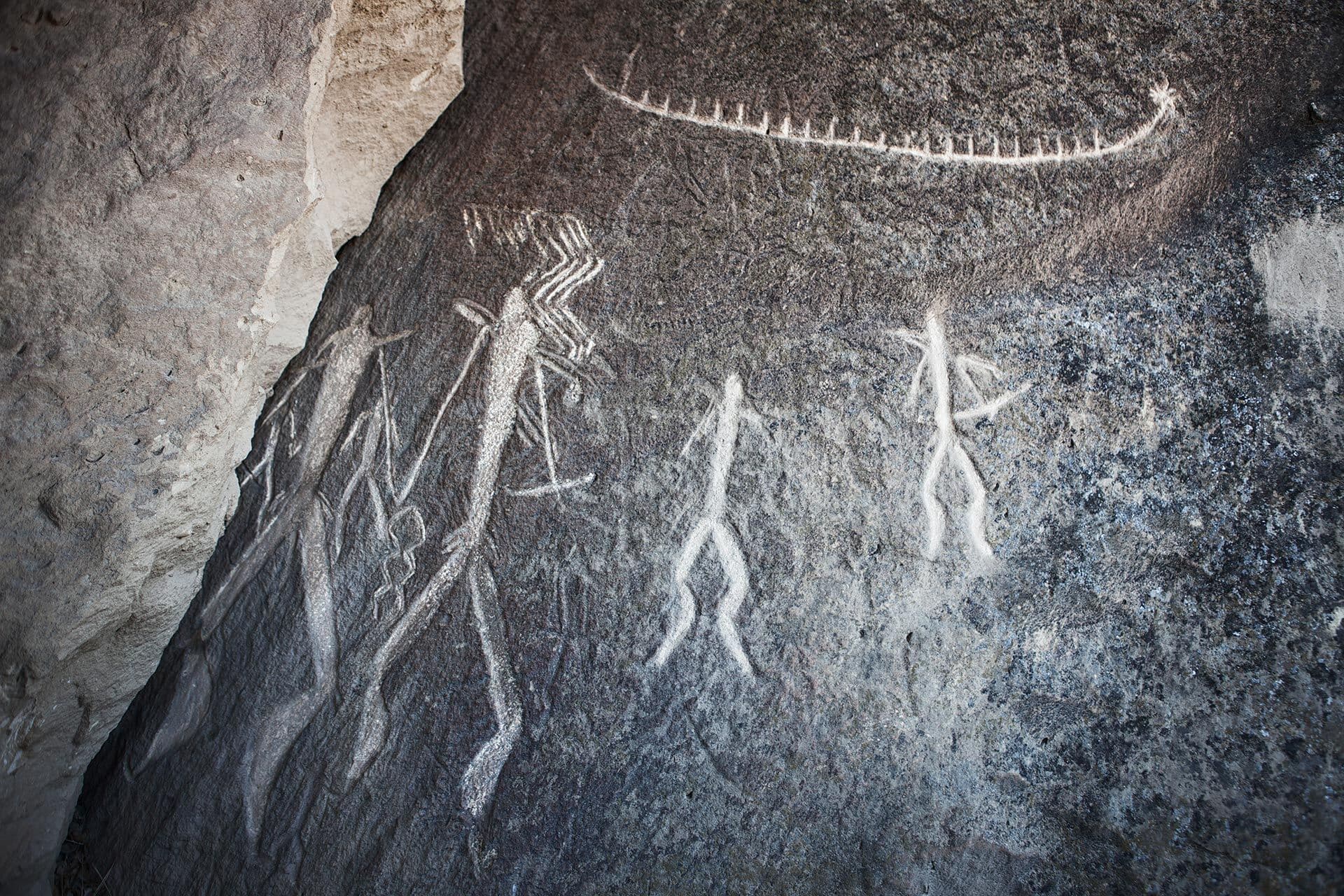
For the last couple of days, I was experiencing exactly that. I've been on a trip to the regions of Azerbaijan, including Qakh, Sheki, and Zakatala. As it is late May, those northern regions are still experiencing relatively harsh weather, including wind, rain, and storms. As we were hiking around the mountains, I climbed up to the waterfall and got soaked through; it was impossible for me not to think about how what we call entertainment today was literally the daily life of our ancestors. Those thoughts along the way raised a few questions in my mind.
What made us come this far? Thousands of years of evolution, and yet we are the ones who made it through. Was it our brain? Most probably, but not in the way we imagine. We didn't make it through because we were the cleverest; evolution doesn't work that way. It was deeper than intelligence. It was not what intelligence was, but what our cleverness let us do. So what was it?
One interesting thing is that even though we assume it would be impossible for us to live in those conditions, it still is. Thousands of years of evolution shaped us for it, yet it would be hard for a modern human to survive in the wilderness, especially alone. After all, humankind spent 95% of its existence there; climate-controlled houses and easy food are recent for all of us. So what kept us alive? Not only the body, that strong machine built for the wild. And not really the brain either, though it helped, getting us out of trouble about as often as it got us into it. The brain doesn't get full credit. What kept us alive was collaboration: learning from mistakes and teaching them to the next generation. The collective memory of the group was what carried us through.
Since modern humans lack this collective memory, it would be hard to live alone, but not impossible. But even that wouldn't have been enough to carry us through. Group life made us develop deeper feelings, empathy, love, and others. Empathy, especially, was not just a feeling; it may have been the most important thing of all. You can notice it yourself: seeing someone in pain makes us feel it too. Maybe not as sharply, but we feel it. That chain of feelings gave us the urge to help others, to ease their pain, because easing it eased our own. Most probably, this single thing is the reason we made it through.
And after all of it, we can still feel that call of the wild in our blood when we hike or walk in the forest, where one feels freer than a bird and takes great pleasure in it. Perhaps I'm romanticizing it, as I always do. But after the long, complicated evolution that made us, it's impossible not to romanticize.
All of this reminded me of Before Adam by Jack London, a book that follows a modern man who dreams the life of a caveman. The book is no masterpiece, it has no deep philosophical dilemmas and no carefully built protagonist, but it does one thing well: it brings the life of the caves close. Its real strength is that same empathy, the one it creates in us, showing how those early humans felt the fear of wild animals, the conflicts within their group, and how their small society worked. Their circle of care was narrow and immediate, nothing like the wide, forward-looking concern we have now. Yet humankind has always been condemned to live in groups, because the group is what keeps us alive.
After all those years, we taste those wild experiences only for a moment and then return to our comfortable desktop lives, which are neither better nor worse, only different, with their own beauty. And one thing stays unchanged: empathy is still rooted deep in us. It still makes us care for our group, our family, our fellow citizens, and now it keeps alive not just small groups but entire civilizations.
More essays